
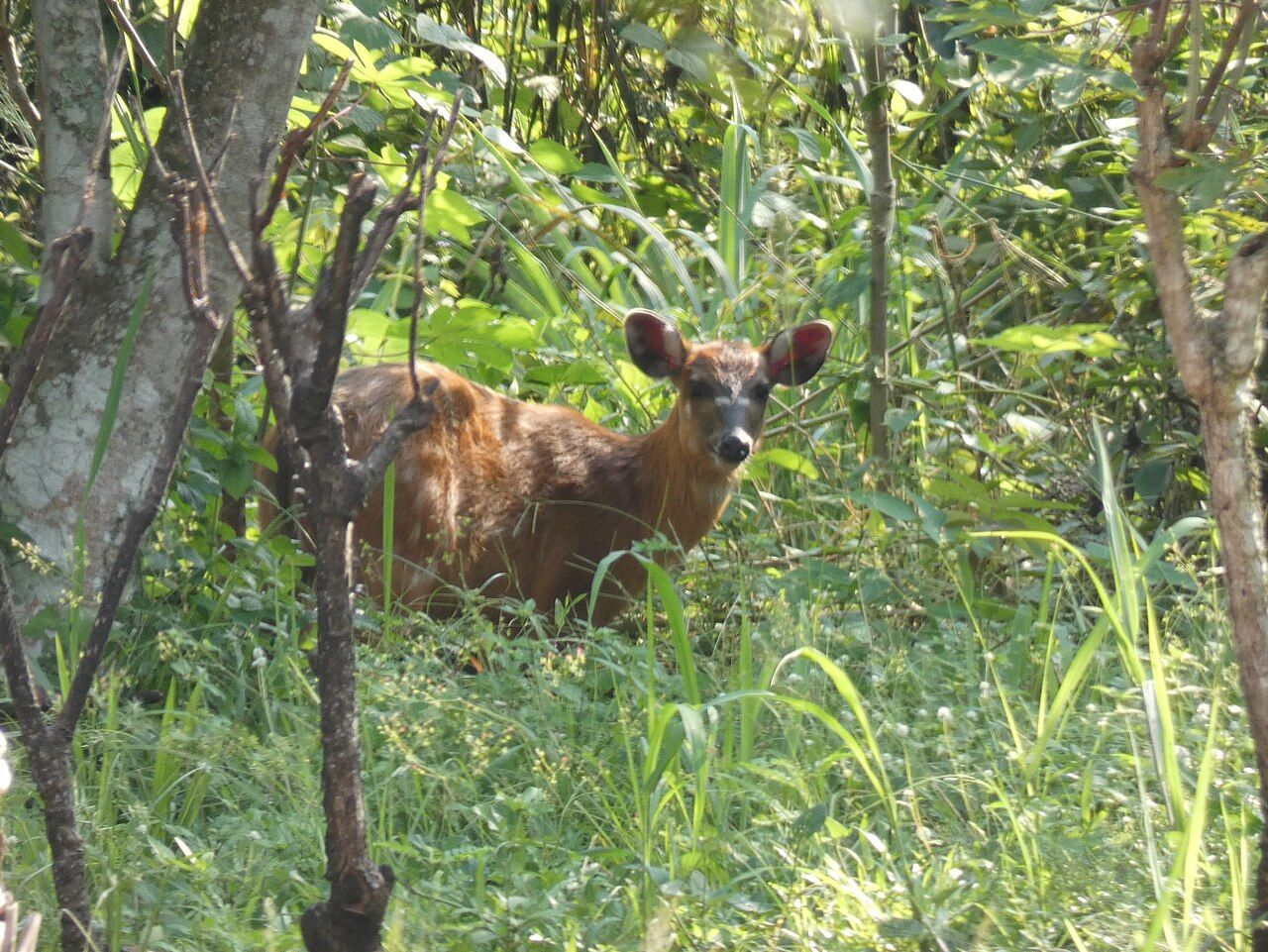
Rubondo Island lies in the south-western corner of Lake Victoria, a long green ridge of forest surrounded by water and a scatter of smaller islets. Almost the whole island is protected as a national park, and it receives very few visitors. Getting there takes effort, and that effort is what keeps it quiet.
There are no big herds here and no long lines of vehicles. Instead there is forest that runs down to sandy coves and papyrus swamps, birds in great numbers, and a stillness that lake islands seem to hold better than anywhere on the mainland. It suits travellers who like to walk, watch and wait.
Forest, shore and papyrus
The island is mostly covered in moist forest, with taller trees in the interior and more open patches of grass and woodland in places. Along the shore, bays alternate with rocky points and beds of papyrus that grow out into the shallows. The mix gives the island its character: you can walk through shaded forest in the morning and sit on a quiet beach in the afternoon, with no one else in sight.
Trails are usually walked with a ranger, who knows where animals tend to feed and how to keep a safe distance. Paths can be muddy after rain and roots catch tired feet, so closed shoes help. Long sleeves and repellent keep insects at bay, especially near the swamps in the evening.
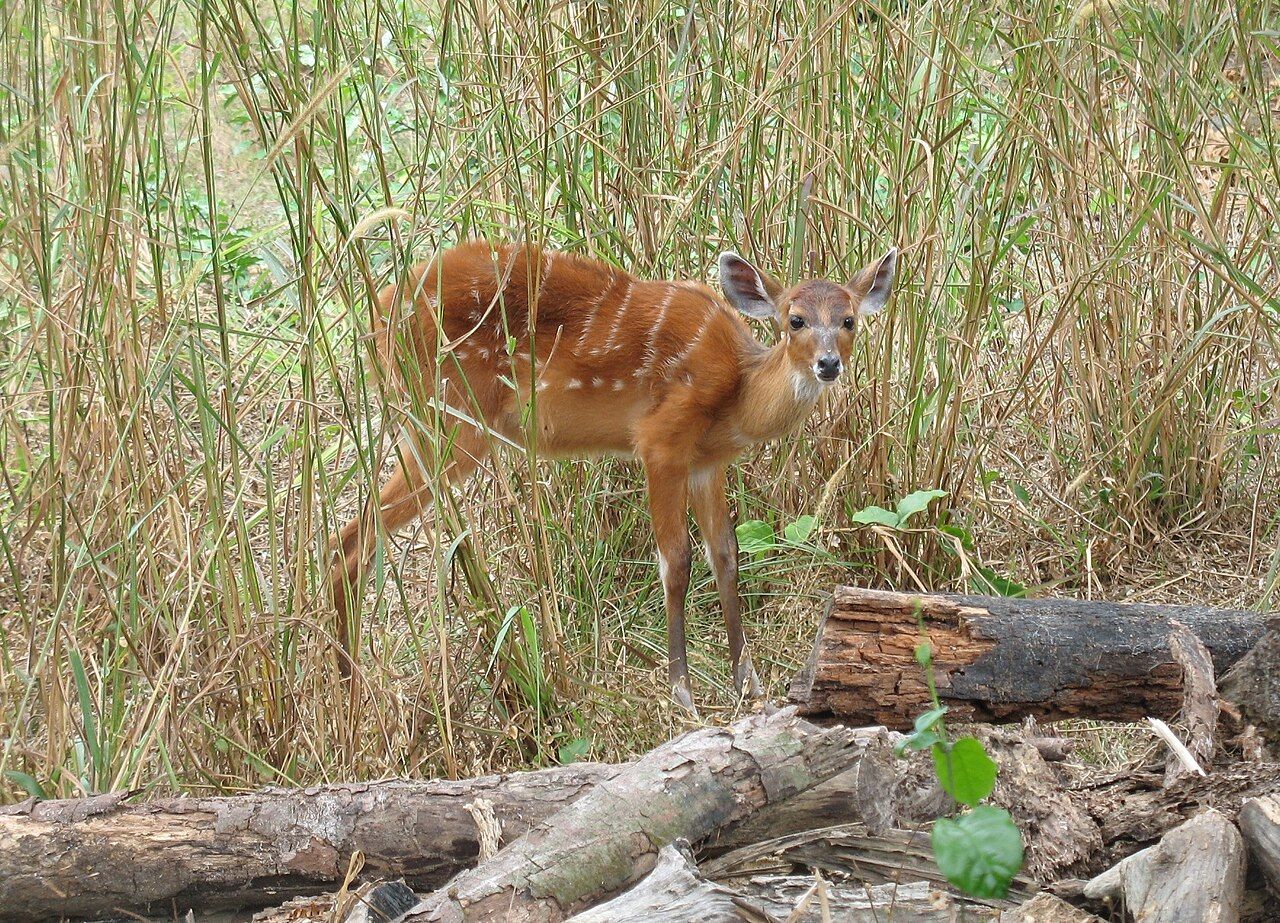
Sitatunga, the marsh antelope
The animal most people come to see is the sitatunga, a shy antelope built for swamps. Its long, splayed hooves let it walk on soft mud and floating vegetation, and it swims well, sometimes resting in water with only its nose showing. Males carry spiralled horns and a darker, shaggier coat; females are a warm chestnut with pale stripes and spots.
Rubondo is one of the better places in East Africa to see this animal in the open. Look for it at the edge of the papyrus early and late in the day, when it comes out to feed on the fringes. Move slowly, keep your voice down and let your ranger lead. A boat trip along the shore is often the best way to see one standing in the shallows.
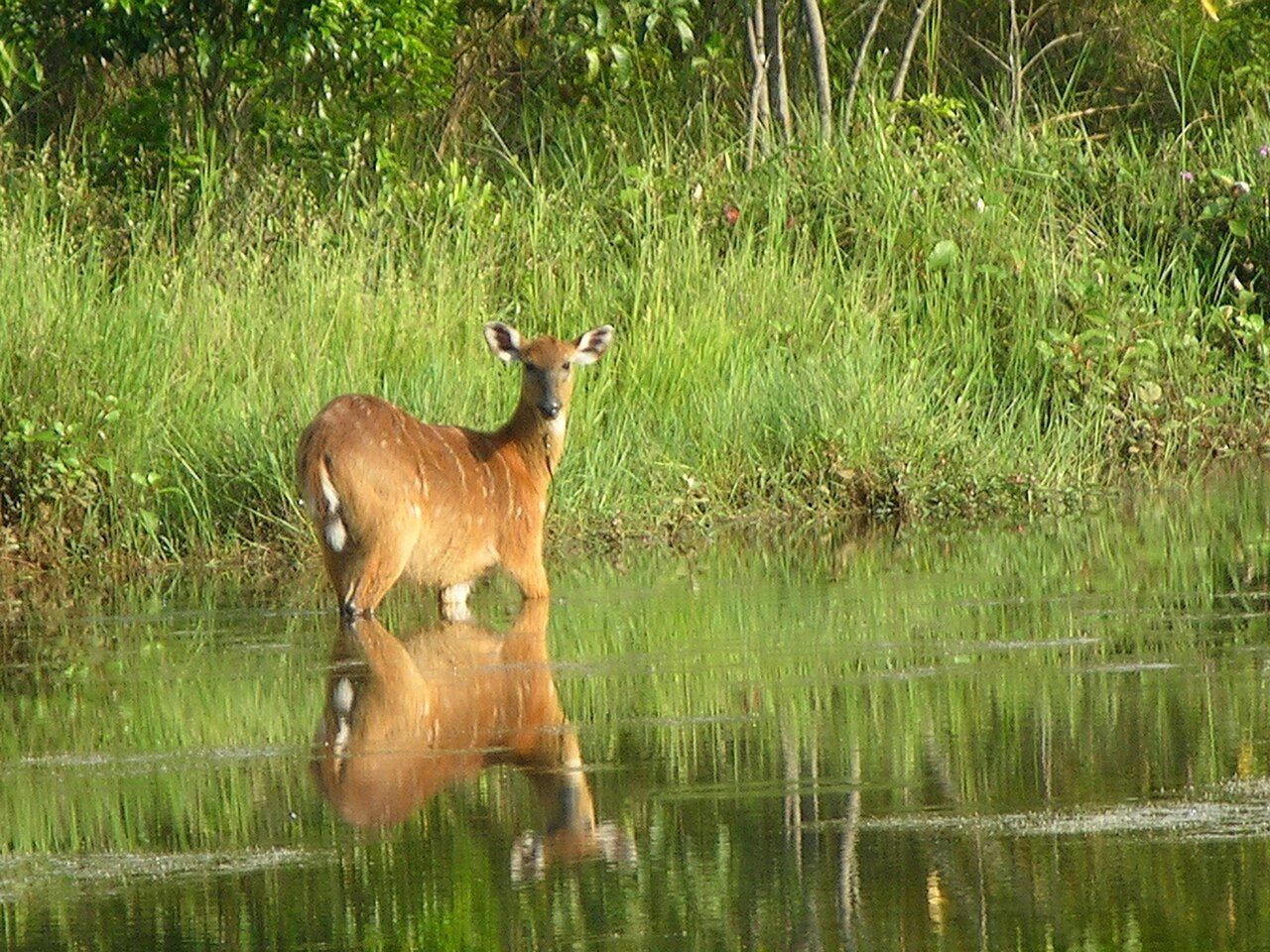
Bushbuck, a close relative, are also common in the forest. Hippos spend their days in the bays and come ashore at night, and crocodiles bask on quiet beaches. Spotted-necked otters sometimes fish close to the rocks, and vervet monkeys and guereza colobus move through the trees.
Chimpanzees on an island, told carefully
Chimpanzees are not native to Rubondo. In the 1960s, a small group of chimpanzees, many of them taken from zoos and captivity in Europe, were released on the island in an early and much-debated attempt to return captive apes to the wild. Other animals were also brought here in those years.
Further on: Gombe Stream, where the forest meets Lake Tanganyika
The chimpanzees survived and their descendants still live in the forest. Because they did not grow up with wild groups around them, their history is unusual, and they remained wary of people for a long time. Efforts to accustom some of them to quiet human visitors have been made over the years, but sightings are far from certain, and the rules and options for chimpanzee walks here change. Treat any glimpse as a bonus rather than the reason for the trip.
If seeing wild chimpanzees is your main hope, the forests along Lake Tanganyika offer a different experience: groups that have lived there for many generations and have been studied for decades. The pages on Gombe Stream and the Mahale Mountains explain how those visits work.
Birds and the lake by boat
For many visitors the birds are the real reward. African fish eagles are common, and their high, ringing calls carry across the bays from first light. Herons, egrets, kingfishers, cormorants and darters work the shallows. In the forest you may hear turacos and hornbills before you see them, and migrant birds arrive in the months of the northern winter.
Sit by the water at dusk and the island fills with sound: frogs, insects, the grunt of a hippo, the last fish eagle calling.
Boat trips around the shore and between the smaller islets are one of the pleasures of a stay. They let you see the papyrus from the water side, look for otters and crocodiles, and watch fish eagles drop to the surface. Sit by the water at dusk and the island fills with sound: frogs, insects, the grunt of a hippo, the last fish eagle calling.
Swimming in the lake is best avoided. Crocodiles and hippos are present, and bilharzia, a parasite found in many African lakes, is a risk in still freshwater; ask a doctor about it and about malaria before you travel.
Boats from the Mwanza side
Most visitors reach Rubondo by road from Mwanza to a landing on the lakeshore, then by boat across to the island. The drive takes several hours on mixed roads, and the boat crossing depends on weather and arrangements made ahead. There is also an airstrip for light aircraft. Park fees apply, along with charges for boats and guided walks.
Plan on at least two or three nights. One day is spent arriving, and the island reveals itself slowly, through repeated walks and boat trips at different times of day. Accommodation on the island is limited, so arrange it in advance.
Fishing is another quiet pleasure here. The waters around the island have long drawn anglers hoping for Nile perch and tilapia, and catch-and-release fishing is sometimes allowed under park rules. Ask what is permitted before you cast a line.
Life on the island is slow and simple. Electricity may be limited, phone signal comes and goes, and evenings end early. Bring a headlamp, spare batteries for cameras and a book. Pack binoculars, a long lens if you have one, and clothes in muted colours for forest walks. Most of all, bring patience: Rubondo rewards people who sit still at the edge of the papyrus and wait to see what comes out.
The best months for walking are the drier ones from about June to August, though the short dry spell around the turn of the year can also be good. Rains make paths slippery and some trails harder to use. For a broader view of timing, see the guide to dry seasons, long rains and short rains, and for the city on the way in, the page on Mwanza and the Lake Victoria shore. Few places on the lake feel this far from the road.
Pictures here: Tony King – CC BY; Lucy Keith-Diagne – CC BY; Tony King – CC BY


