
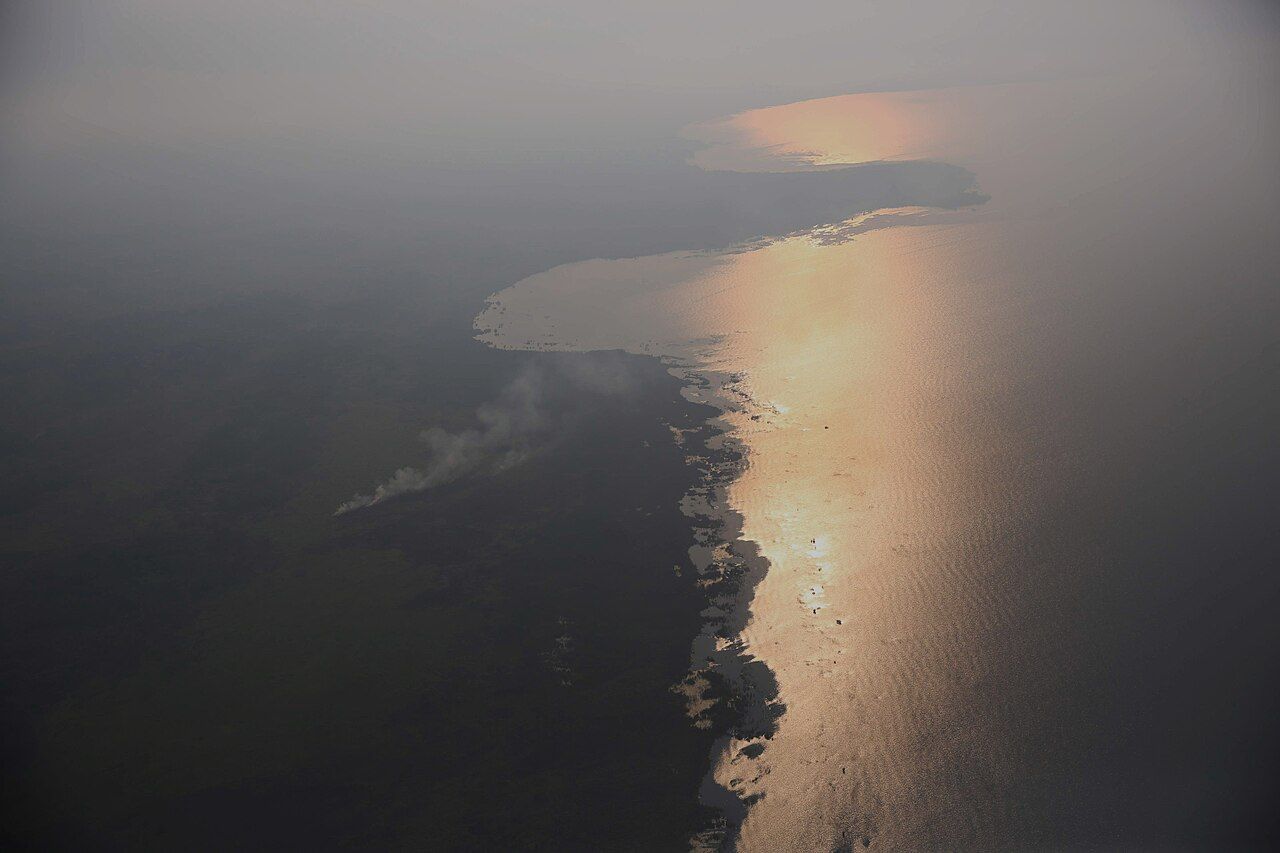
The Mahale Mountains form a high, forested peninsula that juts into the eastern side of Lake Tanganyika. The range rises from the water's edge to more than two thousand metres, its lower slopes covered in thick forest and its upper ridges in grass and bamboo. Below, white sand beaches meet water so clear you can see the pebbles far out from shore.
It is one of the most remote national parks in Tanzania. There is no road into it at all, and every visitor arrives by boat or small plane. The few who make the journey come mostly for the chimpanzees, but stay for the stillness of the place.
Light aircraft and lake boats
The usual way in is by light aircraft to an airstrip near the park, followed by a boat ride along the shore. Flights are often scheduled only on certain days, and many combine Mahale with the floodplains of Katavi to the east, a pairing that makes sense of the long distances. Prices for flights and stays here are high, reflecting the cost of reaching such an isolated place.
The alternative is the lake. Boats travel south along the shore from Kigoma, a long journey that can take many hours or more than a day depending on the vessel, the stops and the weather. Lake transport is irregular, so allow spare days. Wherever you start, carry a dry bag for cameras and documents.
Arriving by water is part of the experience. The mountains appear slowly out of the haze, then grow until they fill the view, their slopes dark with forest down to a thin line of sand. Fishing villages along the shore outside the park give way to empty beaches once you enter it.
Chimpanzees in the forest
Mahale's chimpanzees have been studied by researchers since the 1960s, and one large group has grown used to the quiet presence of people. Visits are made on foot with a park guide, who follows trackers to where the apes are feeding. Some days that means a short walk; on others you climb for hours through steep forest, on muddy paths and over roots.
The rules follow the same logic as elsewhere: chimpanzees catch human illnesses easily. Expect to wear a face mask, keep a set distance, spend a limited time with the group and stay away if you are unwell. Minimum ages apply.
Being in the forest when the group is moving is a remarkable experience. Calls rise through the valley, branches shake overhead and a chimpanzee may walk past within a few metres along the trail, entirely indifferent to you. Watch, keep still and follow your guide's instructions.
Further on: Gombe Stream, where the forest meets Lake Tanganyika
Mountains and other wildlife
The forest holds much more than chimpanzees. Red colobus, red-tailed and blue monkeys move through the canopy, and yellow baboons forage along the shore. Bushbuck feed in clearings. Birdlife is rich, from forest species calling in the understorey to fish eagles watching the shallows.
The highest point of the range, Nkungwe, rises well above the lake and can be climbed over several days with a ranger. It is a demanding trek through forest, bamboo and grassland, with long views across the lake when the haze clears. Ask well ahead if you want to try it, and be honest about your fitness.
On the western side of the mountains, where rain is lower, the vegetation changes to drier woodland, and different animals live there. Few visitors see it; most stay near the lakeshore.
Forest walks without the chimpanzees are worth doing too. With a guide you can follow streams up into the valleys, look for butterflies and forest birds, and find small waterfalls in the shade of huge trees. The pace is slower and the forest reveals details you miss when you are hurrying after a group of apes.
The beaches and the lake
Between walks, the beach is where days slow down. The water of Lake Tanganyika is clear and calm in the early morning, and the sand is often empty for long stretches. Fishermen pass in wooden boats, and in the evening their lamps dot the dark water as they fish for the small silver fish the lake is known for.
Lake Tanganyika is one of the deepest and oldest lakes on Earth, and it shelters hundreds of fish species found nowhere else. Swimming is a common pleasure along this shore, but ask locally about conditions and crocodiles, and talk to a doctor about water-borne illnesses before you travel.
Sunsets here can be extraordinary, especially when smoke from dry-season fires hangs over the lake and turns the light amber. Sit still for an hour on the sand and you will understand why so few people who make the effort regret it.
July to October in the forest
The dry season, roughly July to October, is the usual time to visit. Paths are drier, the chimpanzees often move lower towards the lake later in the season, and flights are more regular. In the long rains, from about March to May, many places to stay close and the forest becomes very wet. The guide to dry seasons and rains gives the broader pattern.
Three nights or more
Plan at least three or four nights to give yourself several chances with the chimpanzees and time to rest. Pack light, as small planes have strict baggage limits. Bring good shoes, a rain jacket even in the dry season, binoculars and a headlamp, and expect very limited phone signal. If you want a shorter, simpler visit to the same kind of forest, Gombe Stream further north can be reached more easily from Kigoma.
Pictures here: MONUSCO Photos – CC BY-SA
