
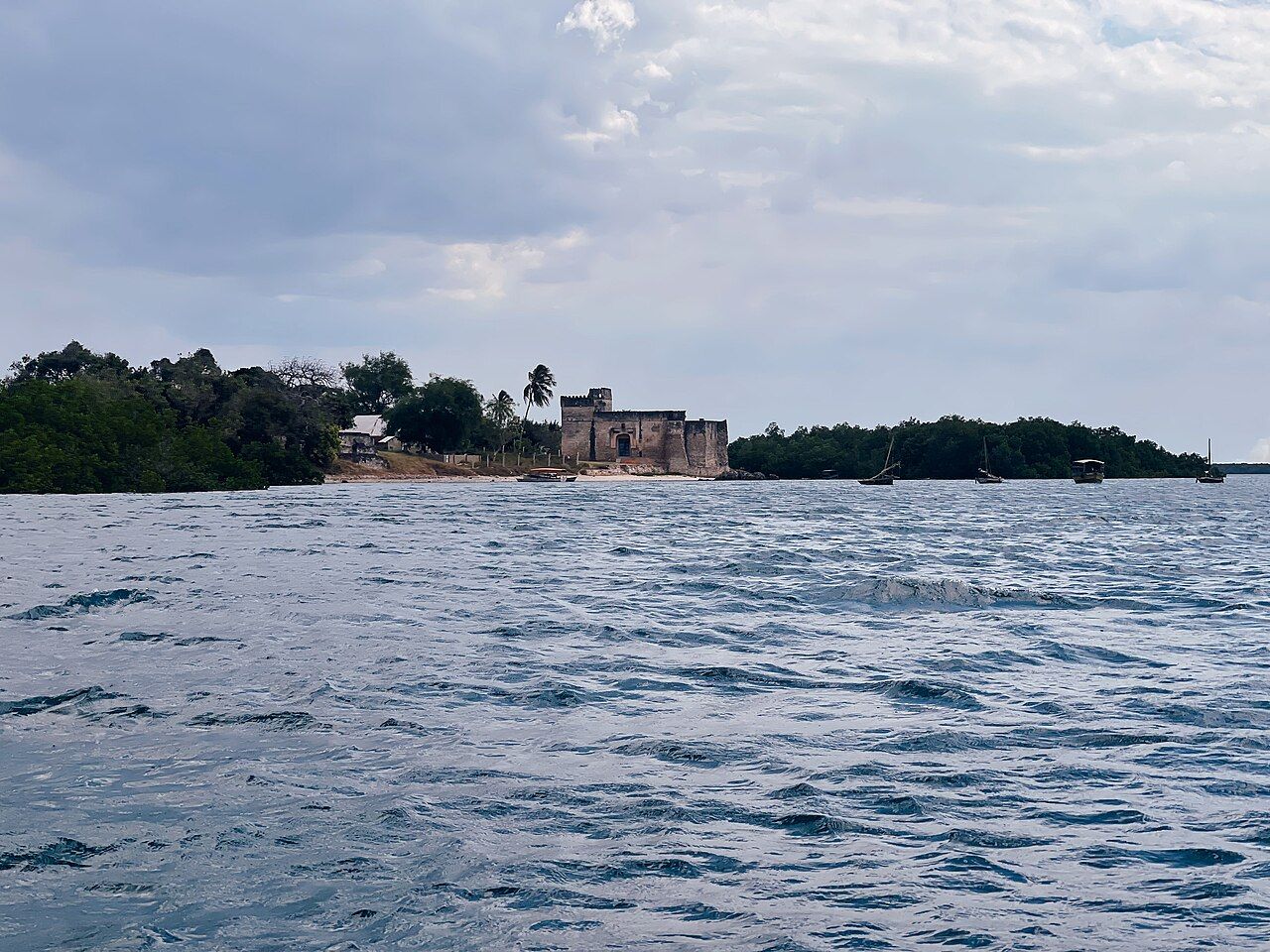
For several centuries Kilwa Kisiwani, a small island just off the southern coast, was one of the most powerful towns in East Africa. Its rulers controlled much of the gold trade coming up the coast from the south, minted their own coins and built in coral stone on a scale few other coastal towns matched. Today the island is home to a fishing village, and the ruins of its great buildings lie among baobabs, scrub and grazing goats. Together with the nearby ruins of Songo Mnara, they are listed by UNESCO as a World Heritage site.
Few people make the journey, and that is part of the experience. You may have the Great Mosque to yourself, with only the caretaker and a couple of lizards for company.
Crossing to the island
The base for a visit is Kilwa Masoko, a small town on the mainland. Before crossing you need a permit from the antiquities office in town, and a guide is usually arranged at the same time. Allow time on the first morning for the paperwork.
From the jetty in Kilwa Masoko, a boat takes you across a narrow channel to the island. Sometimes this is a motorboat and sometimes a traditional dhow with a lateen sail, which is slower and more pleasant if the wind is kind. Wear clothes that can get wet, and keep your camera in a bag.
The Great Mosque
The Great Mosque is the heart of the old town. Its oldest parts are many centuries old, and it was later enlarged with a long hall of arches and columns roofed by small domes and barrel vaults. Some of those domes still stand. Light falls through gaps in the roof onto worn coral floors, and the mosque feels cool even at midday.
It is no longer used for prayer, but it remains a religious building in the eyes of many people here. Walk quietly, do not climb on walls or pillars, and keep the noise low. Nearby are the remains of houses, a smaller domed mosque and the town's old wells and cisterns, which help you picture the streets that once filled this space.
Graves lie in and around the mosque, some marked, many not. Your guide will point them out. Step around them, and keep picnics and rests for the shade of a tree outside the walls.
Further on: Tanga and the caves to the north
Husuni Kubwa, the palace on the cliff
A walk along the shore leads to Husuni Kubwa, a vast palace complex on a low cliff above the sea. It was built for one of Kilwa's sultans in the period of the town's greatest wealth and seems never to have been fully finished. Even so, its scale is striking: courtyards, terraces, storerooms, an audience court and a series of rooms that once looked straight out over the water.
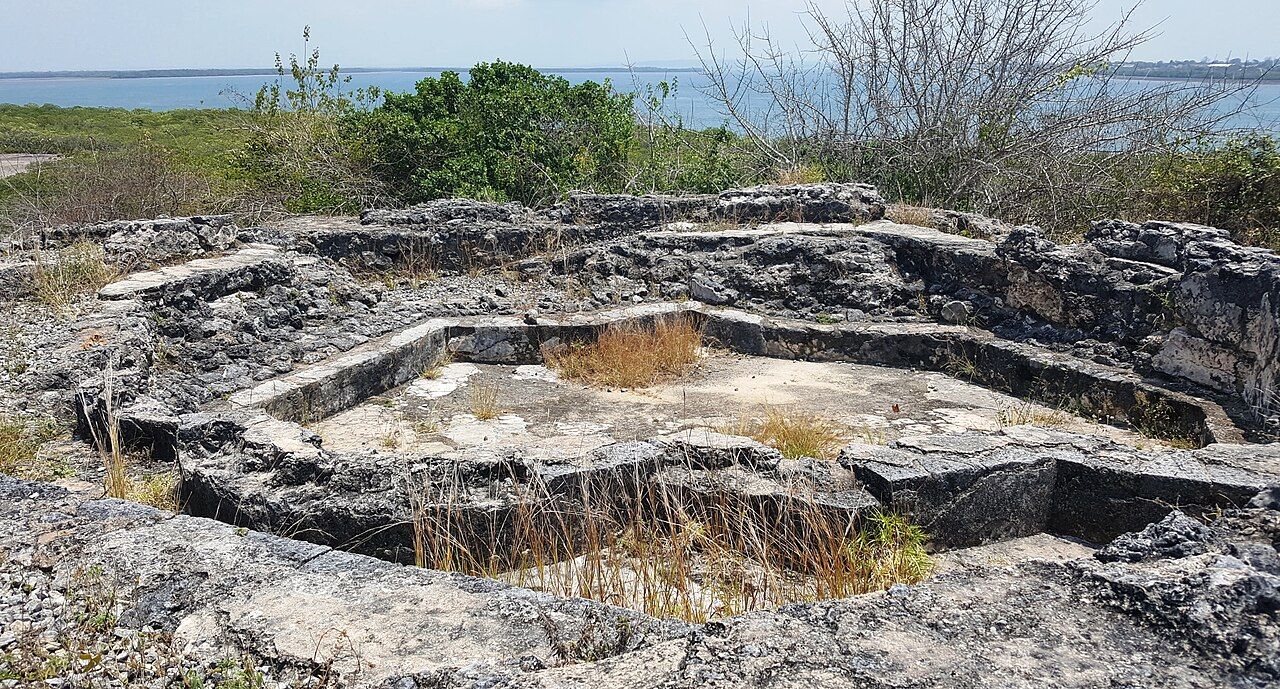
The most famous feature is an octagonal bathing pool cut into the floor of a courtyard, a rare luxury on a coast where fresh water was precious. Stand beside it and look out to sea, and the ambition behind the place becomes clear.
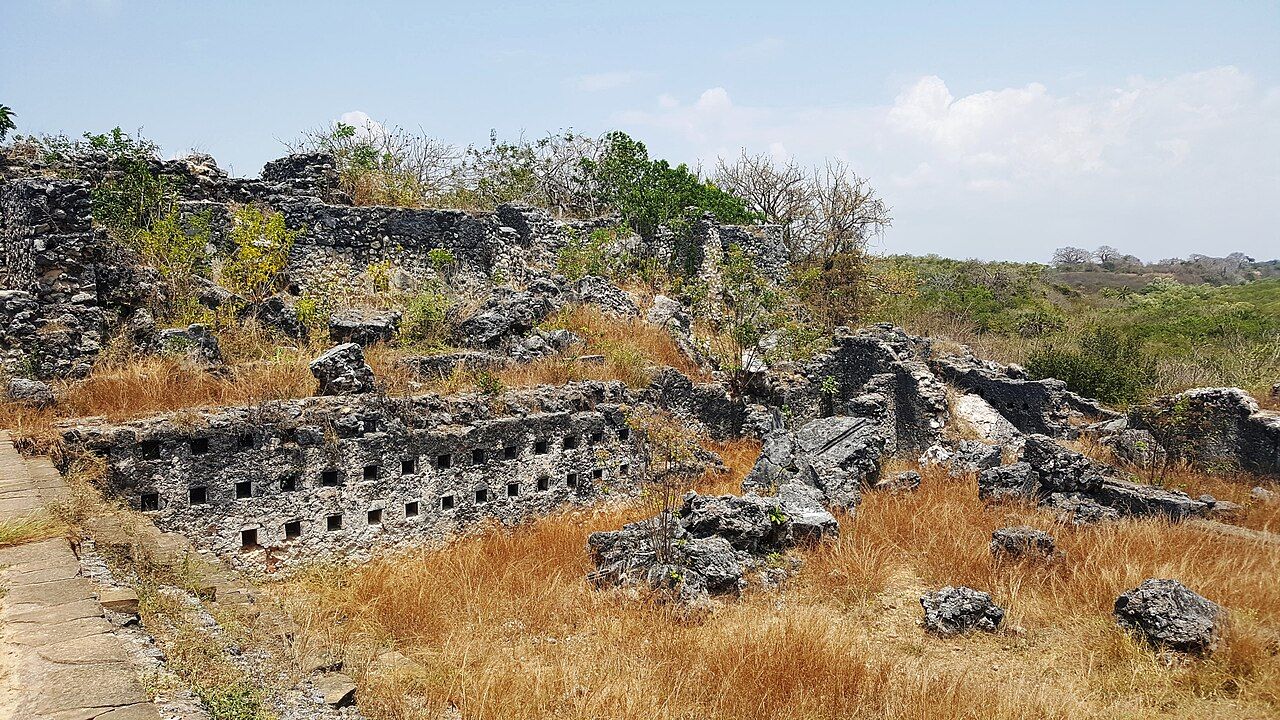
The walk to Husuni Kubwa crosses open ground and can be hot. Go with your guide, keep to paths, and take water. Low tide changes the shoreline route; your guide will know the best way.
The fort and the later town
Near the landing place stands the Gereza, a fort with thick walls and a heavy doorway. It was built by later powers on older foundations after Kilwa's peak had passed, when Portuguese and then Omani interests reached this coast. Its rooms are mostly empty now, but the gate and the view from the walls are worth the climb.
The village today sits alongside the ruins, and people farm, fish and go about their lives among the old walls. Greet people as you pass, ask before photographing them, and dress with shoulders and knees covered as a matter of respect. The habits described in visiting communities responsibly apply here in full.
Songo Mnara and the wider area
If you have time, a longer boat ride reaches Songo Mnara, a smaller island with ruins of a planned town, its houses and mosques laid out in a tight pattern. It needs a separate permit and an early start, depending on tides. The coast around Kilwa also has beaches and mangrove creeks, and the town of Kilwa Kivinje, a short drive north, keeps old buildings from the nineteenth century.
Kilwa fits into a wider journey along the coast. Further north, Tongoni near Tanga has another field of old tombs, and Mafia Island has its own ruins on Chole.
From Kilwa Masoko to the jetty
Kilwa Masoko is reached by road from Dar es Salaam, a long day's drive south on a mostly paved road. Buses run the route; the advice in getting around by bus applies. Small planes have served the airstrip at times, though not continuously.
The cooler, drier months from about June to October are the most comfortable for walking around the ruins. The long rains, roughly March to May, bring heavy showers and rough crossings. It is hot all year, so start early and rest at midday. A hat, a full bottle of water and something to eat make the island day far easier, since there is little to buy on the island itself beyond what the village has. Malaria is present on this coast; ask a doctor about prevention before you travel.
Pictures here: Khalidsalewa – CC BY-SA; Veronika Berdnikova – CC BY-SA; Veronika Berdnikova – CC BY-SA


