
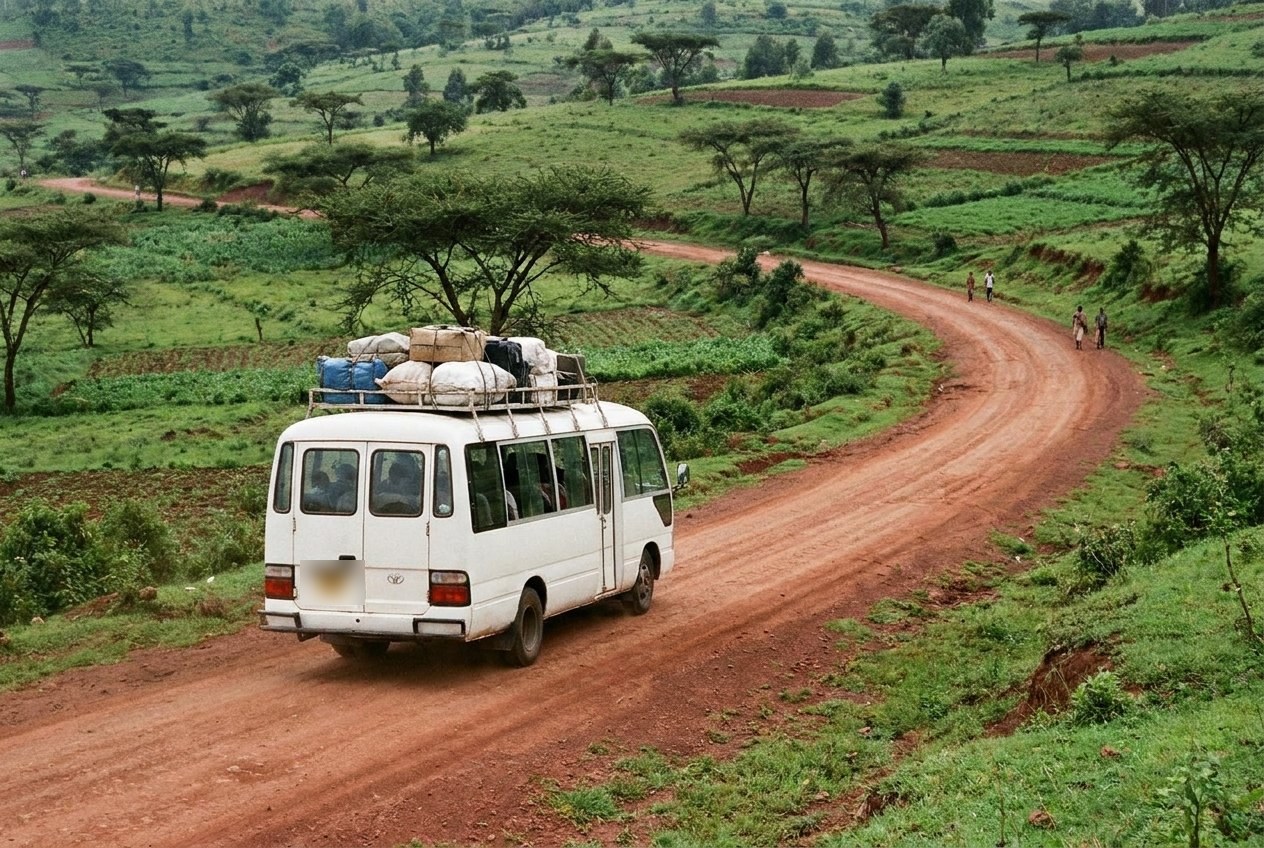
Away from safari vehicles and private transfers, Tanzania moves by shared road transport. Big buses link the cities, minibuses called dala-dalas run around towns and between villages, and three-wheeled bajaji and motorbike taxis fill the gaps. It can look chaotic, but there is order in it, and it reaches places no tour does. With a little knowledge and a sensible attitude to safety, you can cross the country this way.
Long-distance buses
Long-distance buses connect Dar es Salaam, Arusha, Moshi, Tanga, Dodoma, Mbeya, Mwanza and most other towns. They range from older vehicles to modern coaches with reclining seats. Fares are regulated in general; ask at more than one office if prices seem unclear.
Buses usually leave early in the morning, and many run to a fixed departure time. Buy your ticket a day ahead at the company's office in the bus stand, not from someone on the street. You will usually be given a seat number. Arrive in good time, put luggage in the hold if there is room, and keep valuables on your lap.
Long journeys include short stops for toilets and food, and vendors sell snacks and drinks through the windows at many places along the road. Keep water and something to eat with you.
Women travelling alone often prefer a seat near other women or families, and conductors will usually help with that if asked. Seats at the front give a better view and a little more leg room; seats over the back wheels are the bumpiest. On some routes, buses also stop at police checkpoints, which are routine and usually brief.
Road safety
Road accidents are one of the real risks of travel in Tanzania, more so than most other things visitors worry about. A few habits help.
- Travel by day. Night driving is more dangerous, and night travel by bus has been restricted on some routes in the past.
- Choose a bus that looks well maintained, and avoid ones that are clearly overloaded.
- Use a seatbelt where there is one. If a driver is going dangerously fast, other passengers will often speak up; you may too.
- On motorbike taxis, wear a helmet, and decline if the rider refuses to slow down.
Dala-dalas
A dala-dala is a shared minibus, usually painted, often with slogans across the windscreen, and run on fixed routes in cities and between nearby towns. The name is said to come from the old fare of a dollar. A conductor leans out of the door calling the destination and collects fares, which are low and set by route. Have small notes ready.
Dala-dalas stop wherever someone wants to get on or off, which makes them slow but very useful. They fill tightly, so a large backpack is awkward. Ask the conductor or a fellow passenger where to get off; people are usually helpful. In Dar es Salaam, a rapid bus system on dedicated lanes now runs along some main roads, which is faster and easier for a visitor.
Further on: The long train towards Zambia
Bajaji and motorbike taxis
The bajaji, a three-wheeled auto-rickshaw, is the easiest way to cover short distances in towns. It seats two or three passengers and has a roof, which matters in sun and rain. Motorbike taxis, called boda-boda or piki-piki, are quicker and cheaper, and riskier.
Neither has a meter. Agree the fare before you set off, and if you are unsure what is fair, ask someone at your lodging. Ride-hailing services work in the bigger cities but not everywhere.
For a longer trip to a park gate, a waterfall or a viewpoint, hiring a taxi for half a day or a full day can be simpler than piecing together shared transport. Agree the route, the waiting time and the total fare first, and pay at the end.
The standard-gauge railway
Tanzania's new standard-gauge railway runs electric trains from Dar es Salaam inland, with Morogoro and Dodoma among the first stations served and more of the line under construction further west. It is fast, clean and comfortable compared with the roads, and it is a welcome option for the long journey inland. Departures, routes and fares are still settling, and seats are worth booking ahead.
It is different in character from the older line to Zambia, described in the TAZARA railway, which remains slow and scenic.
A small bag for the bus
Keep a small bag with water, snacks, a scarf against dust and sun, and some tissues. Use local currency in small notes. Watch your belongings at bus stands, which can be crowded and busy, and be wary of touts who offer to carry bags or sell tickets. A firm, polite refusal works.
Above all, allow time. Buses can leave late or wait to fill, roads can be closed by rain, and a journey that looks short on a map can take all day. The wet months, explained in the seasons guide, are when rural roads are most likely to be slow or cut. A few words of Swahili make every step easier; a little Swahili for the road covers greetings and numbers.
Travelling this way also means sharing space with people who live here. Offer your seat to the elderly, keep your voice down, and accept that a crowded bus is someone else's daily commute. That patience is the price of the ride, and it is usually well worth it.