
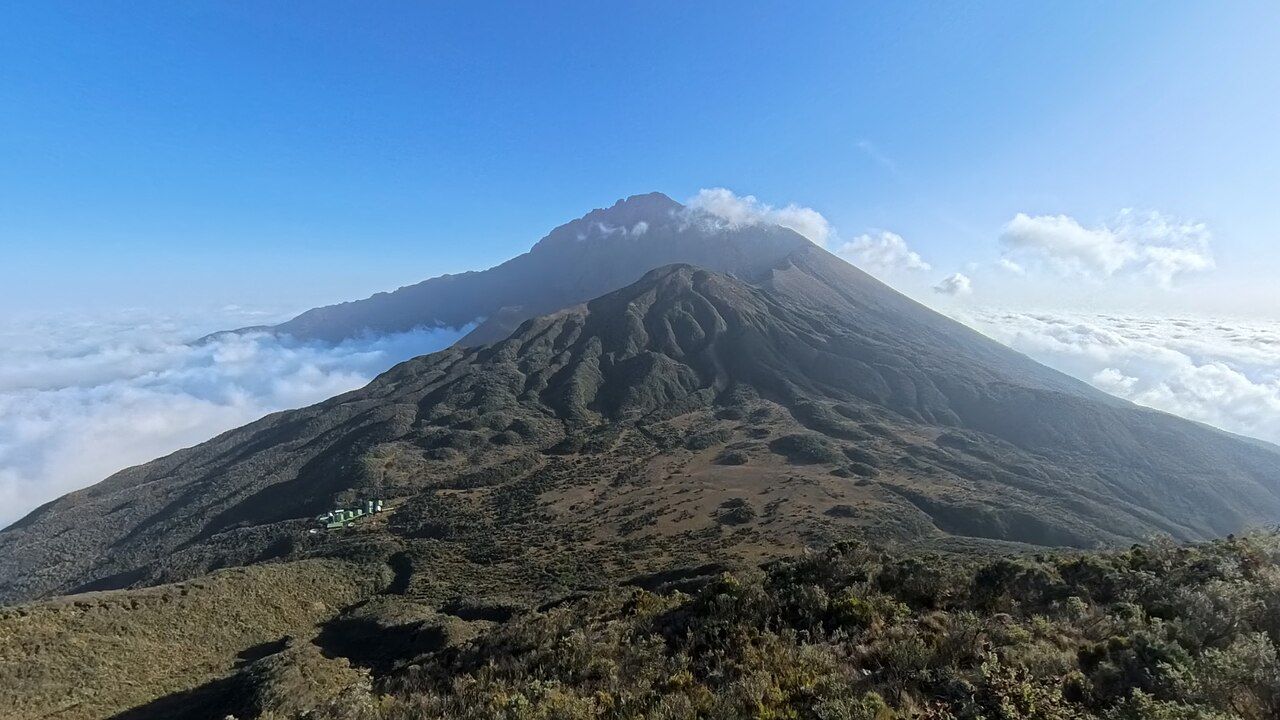
Arusha National Park is easy to overlook. Most travellers pass through the town of Arusha on their way to the big parks further west, and this small park on its edge rarely gets more than a passing thought. That is a pity, because it packs a great deal into a small space: forest, lakes, open glades, a crater and the second-highest mountain in Tanzania.
It is close enough to visit in a day, and quiet enough that you may have long stretches of it to yourself.
Forest and Ngurdoto Crater
The road into the park climbs through montane forest, thick with tall trees, hanging lichens and dense undergrowth. This is the best place to see black-and-white colobus monkeys, with their long white capes and tails, leaping through the canopy. Blue monkeys and baboons also live here.
Ngurdoto Crater, in the eastern part of the park, is a small, steep-sided crater whose floor is kept free of visitors. From viewpoints on the rim you look down onto a swampy meadow where buffalo and other animals graze undisturbed. It is a reminder that some places are better protected by leaving them alone.
The forest is also good for birds. Turacos flash red wings as they cross the road, trogons sit quietly in the shade, and hornbills call from the treetops. Stop the vehicle now and then, switch off the engine, and listen. The forest is often more alive than it looks from a moving car.
Mist often hangs in the forest in the morning, especially in the wetter months, and drips from the trees long after rain has stopped. Cool, damp air and the smell of wet earth make a strong contrast with the dry plains around Arusha.
The Momella lakes
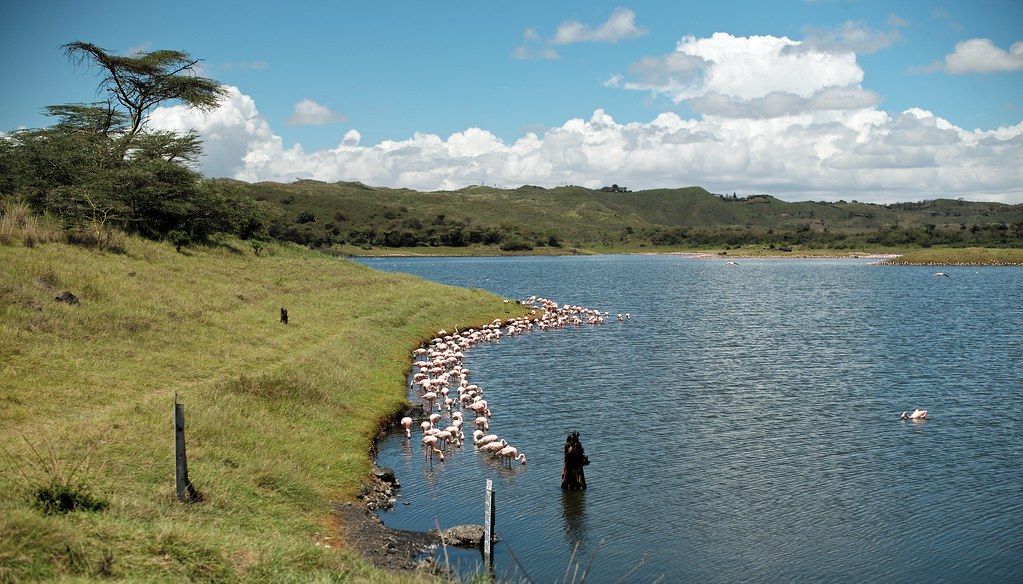
North of the forest, a series of shallow lakes lies among grassy hills. The Momella lakes are alkaline, and their colours vary from blue to green depending on the minerals and algae in each. Flamingos sometimes gather on them, as do other water birds, and hippos live in some of the lakes.
Giraffes, zebras, waterbuck and buffalo graze the open land around the lakes. On clear days Kilimanjaro appears to the east above the hills, and Mount Meru dominates the view to the west.
The lakes are at their best in the early morning, when the light is soft and the wind has not yet ruffled the water.
Further on: Mkomazi, dry country under Kilimanjaro
Walking with a ranger
Arusha National Park is one of the few parks in northern Tanzania where you can walk among wildlife with an armed ranger. Walks lead through forest, across grassland and along the edge of the lakes, and give you a very different sense of the place than a vehicle does. Buffalo are the main reason for the ranger's presence; they can be unpredictable and dangerous on foot.
Walks are usually half a day or less and arranged at the park. Follow your ranger's instructions without question, wear neutral colours and sturdy shoes, and bring water.
Large predators are scarce in the park, which is one reason walking is possible, but leopards and hyenas are present. Stay alert and keep together.
Mount Meru and its crater
Mount Meru, at more than four and a half thousand metres, is the park's great feature. It is an old volcano whose eastern side collapsed long ago, leaving a vast horseshoe crater with sheer walls and an ash cone rising inside it. The view from the rim across the crater to the summit is one of the finest in Tanzania.
The climb usually takes three or four days, with nights in mountain huts and an early-morning summit attempt along a narrow ridge. An armed ranger accompanies every group, and guides and porters are usually hired as well. It is a serious mountain: altitude sickness is a real risk, the summit ridge is exposed, and nights are cold. Talk to a doctor about altitude before you go.
Many climbers use Meru as preparation for Kilimanjaro, but it deserves to be climbed for its own sake. It is quieter, the scenery is varied, and wildlife is often seen on the lower slopes.
A day from Arusha
The park gate is a short drive from the town of Arusha, so a full day in the park is easy to arrange. Start early to see the lakes in good light, explore the forest in the late morning, and return to town in the evening. If you want to walk or climb, plan an extra day or more.
The dry months from about June to October, and the short dry spell around January and February, are the best times to visit. Rain can fall at any time on the mountain, so carry a jacket and a warm layer. For timing across the country, see the guide to dry seasons and rains. Arusha also makes a good starting point for the less-visited north, including Lake Natron and Lake Eyasi.
Fees, roads and binoculars
Park fees apply for entry and for activities such as walks and climbs. Roads within the park are mostly in fair condition, though some become muddy after rain. Bring binoculars, a camera with a good zoom for the colobus, and a picnic, as food options inside the park are limited.
